
















The old routine had too many moving parts: find a ROM, locate a compatible emulator, map the controls, then hope the version is the one you remember. Now you can play arcade games without download — pick a cabinet in a browser, drop in a virtual coin ?, and the game runs where you are, on the machine already in front of you.
? Key takeaway: No-download play is only worth having if the cabinet is the real one. Check the year, the manufacturer, and the controls before the first credit goes in.
That convenience only matters if the cabinet is right. There is a large difference between an original 1981 arcade game running through emulation and a modern browser game wearing the same name. The attract mode, timing, sound hardware, control layout, and occasional sharp edges are part of the record. They are also why the game still feels like itself.
?? What no-download arcade play should mean
A proper browser arcade does not ask you to install an emulator, fetch a plugin, or keep a folder of game files organised. Three things should happen without you arranging any of them:
- The cabinet loads in the page. No installer, no plugin, no unpacking.
- The emulation runs on your device, commonly through WebAssembly, which lets code operate at speeds suitable for older arcade hardware.
- Your input just works — keyboard, controller, or touch screen, whichever you happen to have.
Behind The Cabinet sets out exactly how that works here: the server never emulates a frame.
? This is not game streaming. With streaming, a remote computer runs the game and sends video back to you. Browser emulation instead runs the game on your own device after the page has loaded. That generally keeps controls more immediate, especially on a solid desktop or laptop, while avoiding the account setup and storage demands of traditional emulator use.
There are limits, and they are worth knowing before you blame the game:
- ? A weak or aging phone may take longer to load a large game.
- ? An unstable connection can interrupt the initial load.
- ? Battery-saving modes throttle exactly the work emulation needs.
- ? Aggressive content blockers and locked-down browser settings can interfere.
No-download does not mean no technical requirements. It means the requirements are handled in the browser rather than handed to you as an installation job. The player help and FAQ covers the ones that actually come up.
? Choose the cabinet, not just the title
The fastest way to waste a free evening is to search by a half-remembered title, open the first result, and assume every version is interchangeable. Arcade history is not that tidy. A game may have regional releases, revisions, bootlegs, home conversions, and sequels with nearly identical names.
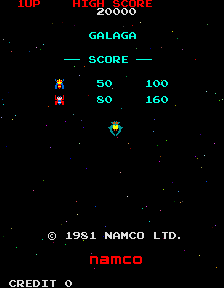
Start with the cabinet details. If you want the clean, purposeful movement of Namco's early-eighties shooters, the timing of Galaga from 1981 matters. If you are after Capcom's later fighting-game rhythm, Street Fighter II': Champion Edition from 1992 belongs to a different technical and cultural moment. Each of these asks something different of the player, because each was built around different boards, controls, and arcade habits:
- ? Konami, 1987 — Contra: run, aim, and never stop moving forward.
- ? Taito, 1986 — Bubble Bobble: a single screen, two players, and physics you learn to trust.
- ? Sega, 1987 — Shinobi: measured approach, punished haste.
A serious catalogue lets you sort and filter by title, year, manufacturer, system, and genre. Use those filters as you would walk an arcade floor — the games library here holds more than 2,300 original cabinet titles, so the filters are the difference between browsing and searching.
- ? Search a maker when you want a particular house style.
- ? Search a year when you want to stay inside an era.
- ?? Search a system when the hardware is part of the appeal.
Metadata is not filler around the game. It is the cabinet card. A clear release year, original creator, manufacturer, genre, and control guide let you confirm that you have pulled the right machine into place before the first credit goes in.
? Start with a game you can read at a glance
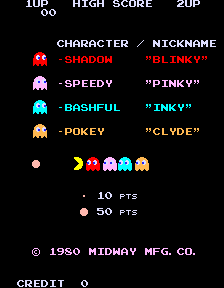
If you have ten minutes, choose a cabinet with a clear first objective. All four of these are open to any visitor, so nothing stands between you and the first credit:
- ? Pac-Man (1980) — four directions, one rule, no explanation needed.
- ? Defender (1980) — demanding, and honest about it from the first wave.
- ?? Scramble (1981) — fuel, terrain, and a route you memorise.
- ? Mr. Do! (1982) — digging, timing, and one very good panic button.
If you have an hour, an arcade brawler or a scrolling shooter gives you more room to settle in. These reward repeated runs, and they also make it easier to notice whether input feels accurate:
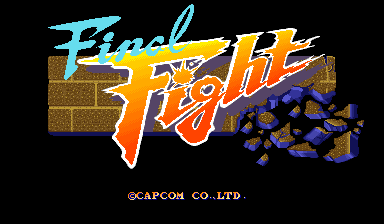
- ? Final Fight (1989, Capcom)
- ? Golden Axe (1989, Sega)
- ? R-Type (1987, Irem)
- ?? Strider (1989, Capcom)
The first missed jump or mistimed special move is usually not a nostalgia problem. It is a control or display problem worth checking.
? For a shared screen, take turns as the arcade intended. A score chase works even when only one person plays at a time. The cabinet was designed around short runs, spectators, advice from the side, and the next player waiting with a coin ready.
? Controls are part of the original game
An arcade cabinet was physical equipment, and the equipment was the design:
- A four-way stick makes Pac-Man feel different from an eight-way stick.
- A spinner changes Tempest completely.
- A trackball changes Centipede and Missile Command.
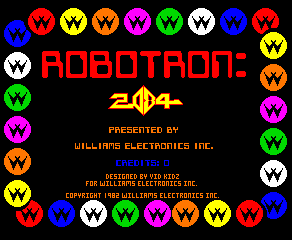
- Twin sticks are the whole design of Robotron: 2084.
Keyboard controls can be excellent for games built around directions and a few buttons, but they are not a universal replacement for every control type.
Before starting, look at the on-screen control guide. It should show only the buttons used by that cabinet, rather than presenting a generic gamepad with controls that do nothing. On a phone or tablet, that matters even more: a touch gamepad needs to leave enough screen visible to read enemy movement, bullet patterns, and score information.
For longer sessions, a controller may be the better choice. It depends on the game and on your muscle memory. A digital directional pad suits many platformers and shooters. Fighting games can benefit from a controller with a reliable directional input, although players used to arcade sticks will still notice the difference. Do not mistake playable for identical. Faithful emulation preserves the game; your input device remains a practical compromise.
? Accuracy has a practical payoff
Original arcade games were often difficult for reasons that are easy to lose in remakes:
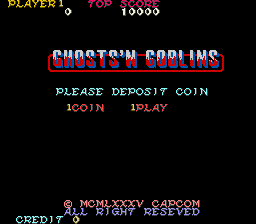
- ?? The opening seconds of Ghosts'n Goblins are demanding because the cabinet was built for repeat credits and learned routes.
- ? Gradius power-ups create pressure because losing a ship can change the pace of the next minute.
- ?? Turbo Out Run feels loose and fast because its steering, road effect, and music were engineered as one experience.
Accurate emulation preserves these decisions. It also preserves quirks: strange hitboxes, abrupt difficulty jumps, rough voice samples, and score systems that are less forgiving than modern progression loops. Those are not defects to be quietly polished away. They are evidence of what players encountered on the floor in 1983, 1987, or 1992.
That is why provenance matters. A catalogue should identify what it is presenting rather than hiding behind a broad claim of retro games. When a title is associated with a manufacturer, year, system, and original creator, you have a basis for judging it. Preservation is not only about keeping a familiar name alive. It is about retaining the particular version, hardware context, and play behaviour that gave the name meaning — the thread the history of arcade games follows from the first coin-operated machines to the preservation work happening now.
? Free credits, memberships, and keeping cabinets available
Browser arcades still need maintenance. Emulation cores require work, catalogues need checking, and servers, storage, and moderation do not run on spare change. A freemium model can be a fair arrangement when it is stated plainly, so here it is — three shelves rather than a paywall across the door:
- ?? Around 320 cabinets are open to anyone who arrives, with no account at all.
- ? Registering is free and adds nearly 700 more.
- ? Supporter access opens the remaining 1,300 and funds the work behind the counter — a monthly membership for regulars, or a day or month pass with no renewal for a short return visit.
? Competitive players have another reason to care about consistency. A ranked high-score table means more when everyone is playing the same cabinet behaviour rather than a mix of altered ports and unofficial settings. A score is only interesting if the run can be understood in context: which game, which version, which rules, and which controls.
? Make the first credit count
- Pick one cabinet you remember poorly rather than one you know by heart.
- Check its year and maker.
- Read the controls.
- Give it three credits before deciding whether it has aged badly or whether you simply have not found its rhythm again.
The best browser arcade session is not measured by how many titles you open. It is the moment a familiar attract tune starts, your first run goes wrong in exactly the old place, and you put in one more coin because now you know what to try. ?
What players are saying…
No comments have cleared the cabinet yet. Be the first player to join in.
Leave your comment
Sign in with a confirmed player account to join the conversation.
Sign in to comment