
















A browser based arcade emulator earns its place when it gets you from the title screen to a credit in seconds, without asking you to become a part-time systems administrator. You should be able to look up Galaga, Final Fight, Turbo Out Run, or Bubble Bobble, choose the cabinet, and play the game you remember — not a tribute, not a mobile rewrite, and not a version with its edges filed off.
That sounds straightforward. It is not. Original arcade games were built around particular boards, processors, sound chips, screen timings, control layouts, and sometimes very idiosyncratic hardware. Putting thousands of them behind a browser window is partly a matter of engineering and partly a matter of judgment. The useful question is not simply whether a game starts. It is whether the cabinet still feels like itself.
The short version ?
If you only read one section, read this one. A browser arcade worth using has to get six things right:
- ? It runs locally. The emulation core executes in your browser, not on a server that streams video back to you.
- ?? It runs the right set. The correct release, manufacturer, and hardware family — named on the page, not implied.
- ?? It is organized like a floor, not a feed. Genre, manufacturer, year, and access tier, all filterable.
- ? It matches controls to the cabinet. A one-button shooter should never show a six-button fighting panel.
- ? Its leaderboards have rules. Same game, same settings, same conditions, or the ranking means nothing.
- ? It is honest about provenance and money. What it runs, where it came from, and who pays to keep it running.
What a browser based arcade emulator is actually doing ??
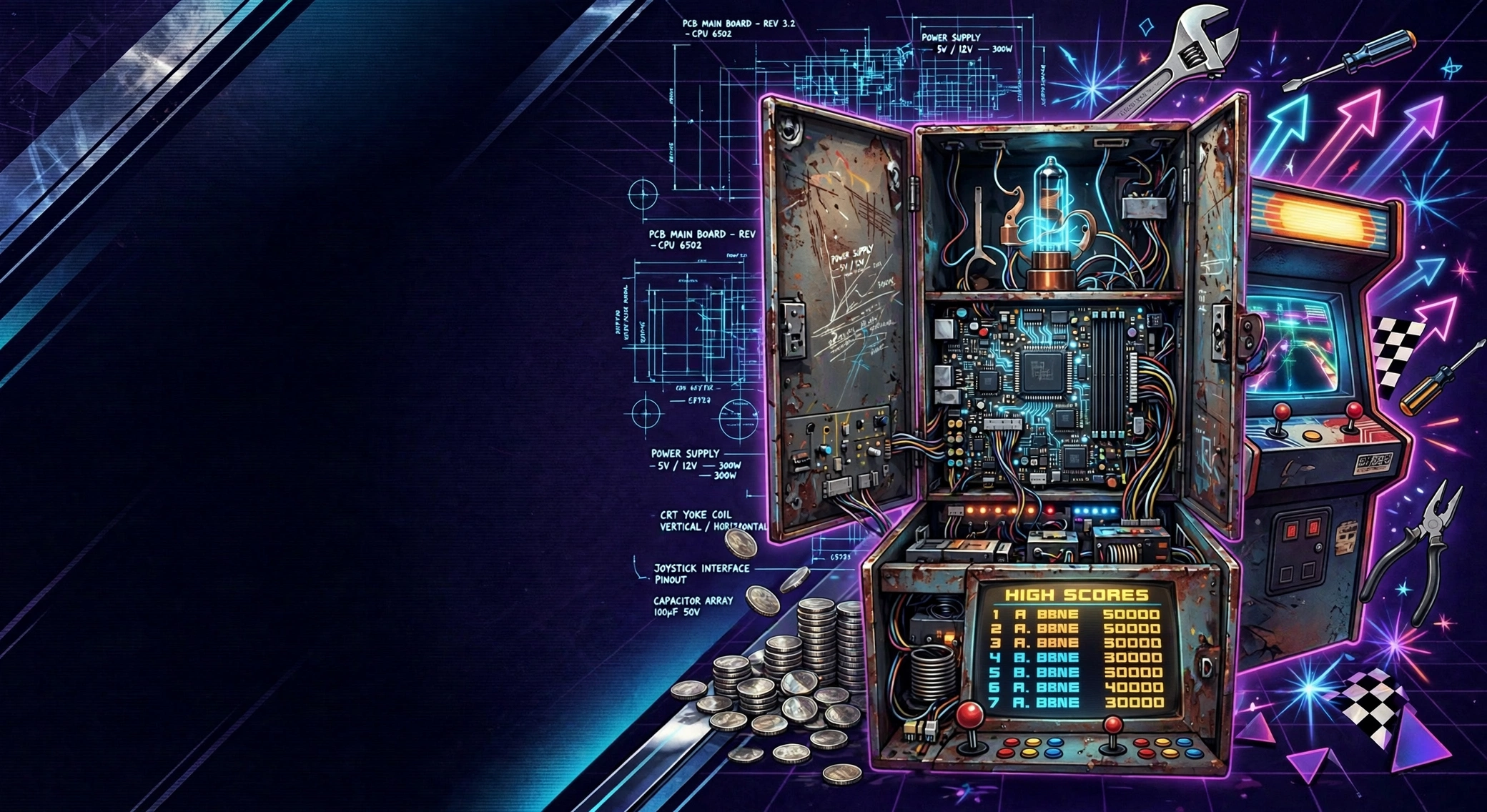
The browser is not reading an old arcade board directly. It is running emulation code that reproduces the behavior of that board in software. Modern browser technology, particularly WebAssembly, makes this practical at a level that would have been difficult a few years ago. The emulation core runs locally in your browser, while the service handles the catalog, game data, controls, access, and player features around it. If you want the full picture of how the cores, ROM delivery, and save handling fit together, our technology and architecture page walks through it.
That local execution matters. It avoids the soft, delayed feeling common to streamed games, where every joystick movement has to travel to a remote machine and back before the screen changes. There can still be limits imposed by your device, browser, or connection during initial loading, but once a game is running, responsive input is the point.
A good setup also removes the chores that used to come with arcade emulation. Compare the old ritual with the new one:
- ? Then: install an application, identify a BIOS folder, rename an archive to match a set name, repair a controller mapping file after every update.
- ? Now: open a page, read the control guide, insert a virtual coin.
Those jobs may be satisfying if you maintain a dedicated cabinet at home. They are less appealing when you have ten minutes and want one clean attempt at 1942.
Fidelity is more than a game booting ??

The phrase "original arcade game" is used loosely online. For a browser collection, it should mean more than familiar character names and approximate gameplay. The correct release, manufacturer details, arcade hardware family, and control scheme all matter.
The details you only notice when they are wrong ?
- ?? Sprite timing — the difference between a dodge that works and one that used to.
- ? Sound pitch — a chip clocked slightly off turns a familiar jingle into an impostor.
- ? Coin behavior — credits, continues, and the attract-mode loop are part of the machine.
- ? Screen orientation — a vertical cabinet letterboxed into a horizontal window is a different game.
- ?? The pause before a stage begins — brief, unremarkable, and instantly wrong when it is missing.
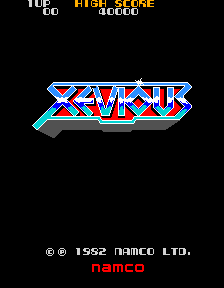
Consider the difference between a vertical shooter and a side-scrolling brawler. Xevious, released by Namco in 1982, depends on a vertical display and its unusual separation of air and ground targets. Final Fight, Capcom's 1989 brawler, lives or dies by movement rhythm, crowd control, and the speed with which a punch becomes a throw. A generic on-screen gamepad or an inaccurate frame rate can make either game technically playable while making it feel distinctly off.
Where emulation still has limits ??
Emulation limits are worth stating plainly rather than hiding. Arcade hardware was not uniform, and individual titles can behave differently across versions or sets:
- ? Some games were revised during their arcade life, so "the" version is really several.
- ? Some have regional variations with different difficulty, scoring, or text.
- ? Some depend on specialist controls — trackballs, spinners, rotary joysticks, and light guns are all approximations at a desk.
- ? A handful of demanding later boards ask more of a browser than of a dedicated machine.
A browser service should name the exact set it is running, on the game page, rather than implying that every version is interchangeable. This is also why a browser arcade should be honest about the cabinets it does not carry. There is no original Out Run in our catalog, for instance, though Turbo Out Run, Hang-On, and Chase H.Q. are all there. A silent substitution is worse than an absence.
The catalog is part of the machine ??

An arcade floor was never just one cabinet. The pleasure came from choice: a row of Taito shooters, a Konami beat-'em-up near the change machine, a Sega racer with a line forming behind it. Online, that experience depends on the catalog being organized properly.
Search is useful when you already know what you want. Filters are what help you remember what you want. Being able to narrow by genre, manufacturer, release year, and access tier turns a large library into something you can browse with intent:
- ? 746 shooters — the genre that dominates the catalog, from 1970s vector cabinets to 1990s bullet curtains.
- ? 291 platformers and 235 fighters and brawlers.
- ? 97 driving cabinets, the line that followed Pole Position.
- ? Data East in release order — or Taito, Sega, Konami, Namco, Capcom, Atari, SNK and the rest, each with its own house style.
- ?? 322 cabinets playable without an account, if you would rather try before anything else.
Metadata is not filler ??
A release year tells you where a cabinet sits in the industry's rapid technical changes. The manufacturer tells you something about its design language. A control guide prevents the usual first-credit waste caused by guessing which key is bomb, jump, or service. Title-screen art and cabinet information give a game its proper identity rather than reducing it to a thumbnail in an endless feed.
Retro-Arcade.org is built around that catalog-first idea, with more than 2,300 cabinet titles running from the early 1970s into the mid-2000s. The weight sits where arcade history sits: roughly 1,300 titles from the 1980s and 800 from the 1990s, with the earlier and later years filled in around them. The point is not to make every game look equally important. It is to make a specific game easy to find, identify, and play when the memory of it comes back. If you would rather read the shape of that period first, the history of arcade games covers it decade by decade, and the arcade statistics page shows how the collection breaks down.
Controls should fit the cabinet ?
Keyboard controls remain the natural choice for many games, particularly platformers, fighters, and shooters played at a desk. A controller can be better for racing games and titles designed around more sustained directional movement. Neither option is universally right. What matters is that the control guide is visible on the game page and the inputs make sense for the cabinet.
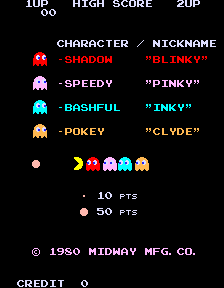
Mobile play needs the same respect. A touch gamepad should not cover half the screen with a standard layout regardless of the game. Pac-Man does not need a six-button fighting panel. A one-button shooter should not make you work around buttons it never had. Showing only the controls a game uses keeps the screen readable and gets closer to the economy of an actual control panel.
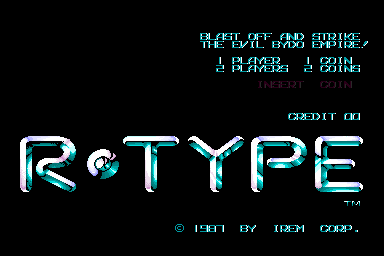
There is a trade-off, of course. Glass has no physical joystick gate, and a touch button cannot provide the resistance of an arcade switch. For precision games such as R-Type, a keyboard or controller will often be the better tool. But touch controls can make a quick run on a phone entirely worthwhile, especially for games with simple inputs and short sessions.
High scores need rules, not just numbers ?

A leaderboard is only interesting if players trust it. Arcade scores are meaningful because they are tied to a particular game, set of assumptions, and a shared understanding of what counts as a run. Once rankings enter the picture, a service has to think about verification, game settings, duplicate submissions, and the difference between casual play and a competitive attempt.
Players who want a quick credit should not have to treat every session as an audit. Players chasing a place on a board should know that their score was produced under the same conditions as the score above it.
Ranked mode works best when it is visible about those boundaries. That is the online equivalent of standing near a cabinet and watching the initials go in — and the live score feed is about as close as a website gets to the sound of a board being beaten two machines away. You can see where the current runs stand on the ranked score boards.
The social side follows naturally. Tournaments, featured score tables, and new-cabinet notices give a large library a pulse. They also encourage a better kind of nostalgia: not simply remembering that a game existed, but finding out whether your old route through its first three stages still holds up.
Provenance and access should be clear ?

Arcade preservation carries legal and technical questions that should not be hidden behind neon graphics. Different games have different histories, rights situations, versions, and sources. A responsible service should be open about what it provides and how access works, which is why our disclaimer says plainly that emulation does not erase questions of ownership or provenance.
The funding model deserves the same directness. Maintaining a large browser arcade means supporting emulation infrastructure, catalog work, game pages, device compatibility, score systems, and ongoing additions. Here is how access is arranged:
- ? Visitor — 322 cabinets, including Xevious and Pac-Man, playable with no account and no payment.
- ? Day and month passes — one-off access that never auto-renews.
- ? Monthly membership — the full floor, cancellable from your account.
Passes and membership keep the cabinets powered without pretending that the collection maintains itself.
Five questions before your first credit ?
Do I need to install anything to play arcade games in a browser?
No. A browser based arcade emulator runs the emulation core in the page itself, so there is no application, no BIOS folder, and no ROM archive to manage. A current desktop or mobile browser is the whole requirement.
Is a browser arcade emulator as accurate as a desktop one?
For most cabinets, close enough that the difference is academic. The core doing the work belongs to the same family of emulation code used on the desktop. The gaps show up in specialist hardware — light guns, spinners, and pressure-sensitive controls — and in a handful of demanding later boards.
Can I play arcade games online on a phone?
Yes, and simple-input games hold up best. Touch controls suit one-button shooters, mazes, and platformers with short sessions. Precision fighters and shooters are better with a keyboard or a connected controller.
How many arcade games are actually playable?
Retro-Arcade.org lists more than 2,300 arcade titles, from early 1970s black-and-white cabinets through to mid-2000s boards. The full library can be filtered by genre, manufacturer, year, and access tier, and 322 of those cabinets are free to play without an account.
Where do I start if I have not played in twenty years?
Start with what you can name, then let the filters do the remembering. The player help and FAQ covers the rest.
The test that matters ?
The best test is a simple one, and it takes about ninety seconds:
- ? Search the catalog for the cabinet you have been thinking about for years.
- ? Check its year, maker, and controls on the game page.
- ? Insert a virtual coin.
- ? Listen. If the first few seconds bring back the timing of the real thing — the sound, the pressure, the familiar first mistake — then the browser has done its job and the cabinet has another turn in it.
What players are saying…
No comments have cleared the cabinet yet. Be the first player to join in.
Leave your comment
Sign in with a confirmed player account to join the conversation.
Sign in to comment